
Market Update - June Qtr, 2023
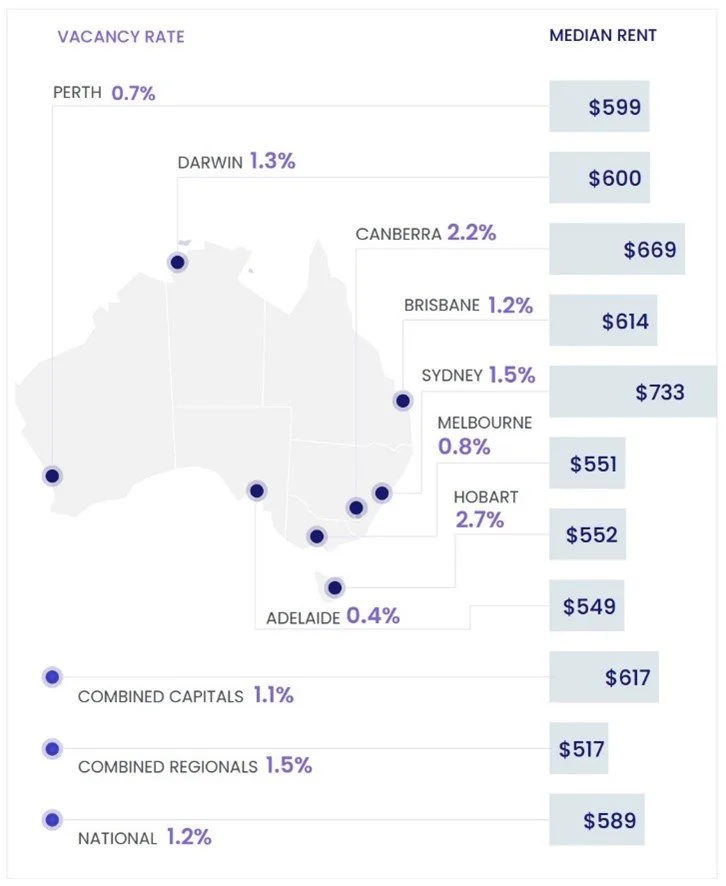
After picking up pace across the start of the year, it appears growth in rents may be beginning to slow. The national median rent increased 2.5% over the 3 months to June, down from 2.8% for the 3 months to May. This is the first time the quarterly growth rate has decreased since November last year.
While this seems to be good news for renters, the growth rate remains comfortably above the long-term average in most locations. This is largely due to chronic supply issues, with the flow of new listings well below the 5-year average. A spike in overseas migration is also driving above average demand for rentals, though vacancy rates have eased slightly.
These upward pressures make the slowing of growth in rents particularly interesting. It suggests that the market may be approaching an affordability ceiling, where renters simply aren’t willing to pay more. This assessment is also supported by the recent increase in average household size and clear movement toward higher density living.
Key Trends We’re Watching
Growth in Unit rents: Since the start of the year, demand for rental units has significantly exceeded demand for other property types. This has seen unit rents increase at a much faster rate than other market segments, across most locations. As a result, the gap between the national median house rent and national median unit rent has almost halved, from $62 week in December to $34 week in June.
Increasing vacancy rates: The national vacancy rate has crept up slightly over the last quarter, from 1.1% in March to 1.2% in June. Hobart saw the largest increase (1.7% to 2.7%), with Sydney (1.2% to 1.5%) and Canberra (2.0% to 2.2%) also recording multi-point rises. This is despite the supply of new listings remaining well below average in most locations.
Fragmenting market performance: Rent growth rates vary significantly across the country, with Melbourne recording the largest increase (up 3.9%) over the last 3 months. Perth (up 3.4%), Sydney (up 3.2%), Adelaide (up 2.5%) and Brisbane (up 2.1%) also saw significant rises. In contrast, the median rent rate in Hobart and Canberra actually decreased (down 1.0% in both cities) from March to June.
Australia’s most affordable capital: Differing growth rates have seen Adelaide become the cheapest capital to rent in, with a median rent of $549 week. This is mostly due to significant increases in Melbourne since the start of the year, pushing the city’s median rent to $551 week. That said, Hobart could soon take this title, with its median rent currently sitting at $552 week, and declining.